Crypto as a service: 8 providers compared (2026)

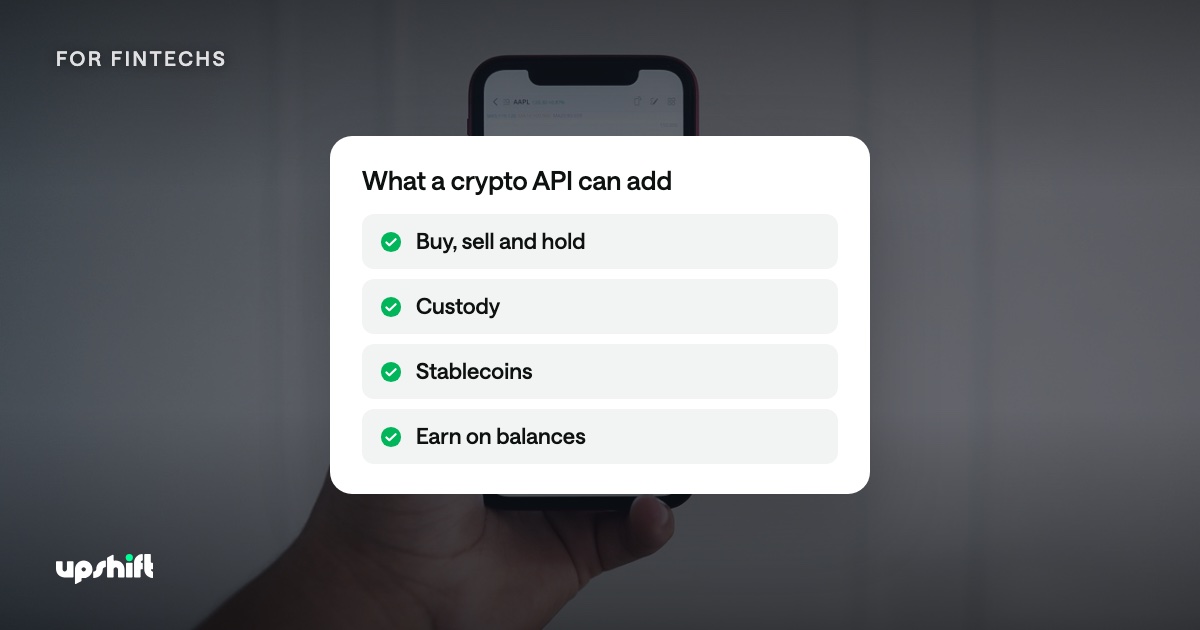
Crypto as a service lets a bank, broker or fintech add buy, sell, custody and stablecoins through one provider's API. Earn sits on top as a separate layer, and each provider means something different by it.
Coinbase won preliminary conditional approval for a national trust charter from the Office of the Comptroller of the Currency on 2 April 2026, four months after BitGo and Paxos won conditional approval to convert their trust companies.
The main crypto as a service providers in October 2026 are Zerohash, Paxos and Alpaca for brokerage and stablecoin APIs, Coinbase, BitGo and Anchorage Digital as custodians with OCC charters or approvals, Fireblocks for wallet infrastructure, and Bitpanda Enterprise in Europe. Each one runs the trading, custody and licences, and the bank or app keeps the customer.
Crypto as a service providers at a glance
Provider | Type | US charter or licence | EU licence | Earn today |
Zerohash | Brokerage and stablecoin API | BitLicense; money transmitter in 51 US jurisdictions; OCC trust charter applied for 4 Mar 2026 | MiCA licence (Dutch AFM); EMI licence (DNB, May 2026) | Staking infrastructure, launched 25 Jun 2026 |
Paxos | Brokerage API and stablecoin issuer | OCC national trust conversion, conditionally approved 12 Dec 2025 | USDG issued by Paxos Issuance Europe under MiCA (FIN-FSA) | USDG partners can receive up to 100% of reserve returns |
Alpaca | Broker API with crypto trading | Alpaca Crypto LLC, FinCEN-registered money services business | None listed | None listed |
Coinbase | Custody, trading, staking, lending, USDC | OCC preliminary conditional approval for a national trust charter, 2 Apr 2026 | Not confirmed (Oct 2026) | Staking; USDC rewards up to 3.60% paid to developers |
BitGo | Custody, trading, staking, wallets | BitGo Bank & Trust, N.A. (OCC conversion conditionally approved 12 Dec 2025) | MiCAR licence held by a BitGo entity | Staking |
Anchorage Digital | Custody, staking, settlement, stablecoin issuance | National trust bank; OCC conditionally approved its conversion 13 Jan 2021 | Not confirmed (Oct 2026) | Stablecoin Rewards for institutional clients, paid by a separate unregulated entity |
Fireblocks | MPC wallets, custody, payments | Fireblocks Trust Company (NYDFS); US money transmitter licences | None listed on its regulated-entities page | Fireblocks Earn on Aave and Morpho, generally available since 15 Apr 2026 |
Bitpanda Enterprise | White-label investing, custody, stablecoins, tokenization | None listed | MiCAR licence from BaFin (January 2025); VARA; FCA registered | None listed |
Sources: provider pages and regulator releases, checked 14 October 2026.
How we chose
Each provider sells crypto to other businesses by API and names the regulated entity behind it. The criteria:
- Licence and charter: which entity is regulated, by whom, and since when.
- Who holds the assets: the custodian entity behind the API.
- US and EU reach: state licences or a federal charter in the US, and a MiCA licence in the EU.
- Public clients: named banks, brokers and fintechs, with dates.
- What Earn means: staking, stablecoin rewards or lending, and who receives the yield.
Brokerage and stablecoin APIs
Zerohash
Best for: brokerages and fintechs that need trading in the US and the EU from one provider.
Zero Hash LLC is a FinCEN-registered money services business, a licensed money transmitter in 51 US jurisdictions and a BitLicense holder, and its Dutch arm holds a MiCA licence from the AFM plus an e-money licence from the Dutch central bank.
Morgan Stanley picked Zerohash for crypto trading on E*Trade in September 2025, and Public (October 2025), Gusto (January 2026) and Visa Direct (August 2026) also use Zerohash, Gusto and Visa Direct for stablecoin payouts. It applied for an OCC trust charter on 4 March 2026 and launched staking for financial institutions on 25 June 2026.
Paxos
Best for: payment apps adding crypto buy and sell next to a dollar stablecoin.
Paxos runs a brokerage API and issues stablecoins, and it names Mastercard, PayPal, Nubank and Mercado Libre as clients. Its trust company won conditional OCC approval to become a national trust bank on 12 December 2025, alongside BitGo, Fidelity Digital Assets and Ripple. Partners in the Global Dollar Network can receive up to 100% of the reserve returns on USDG held on their platform, and they decide how much of it reaches users.
Alpaca
Best for: US investing apps built on Alpaca's stock-trading API.
Crypto trading runs through Alpaca Crypto LLC, a FinCEN-registered money services business, and sits beside stock trading in the same API. Alpaca lists no Earn product for crypto.
Custodians with OCC charters or approvals
Coinbase
Best for: banks and brokers that want custody, trading and staking from one counterparty.
Coinbase's crypto as a service covers custody, spot and derivatives trading, secured lending, USDC payments, staking and tokenization, and the OCC granted preliminary conditional approval for Coinbase National Trust Company on 2 April 2026. The USDC rewards in Coinbase Developer Platform wallets pay up to 3.60% a year (October 2026), and the money goes to the developer's Coinbase Retail or Coinbase Business account. An app that wants its users to earn passes the rewards on itself.
BitGo
Best for: credit unions and community banks that want a federally chartered custodian.
Client funds in BitGo's crypto as a service sit with BitGo Bank and Trust, N.A., whose conversion to a national charter was conditionally approved on 12 December 2025. BitGo supports trading, staking and transfers across more than 1,400 assets, holds a MiCAR licence in the EU and names Fold as a client.
Anchorage Digital
Best for: institutions that want a custodian with a federal charter in place since 2021.
The OCC conditionally approved Anchorage Digital Bank's conversion to a national trust bank on 13 January 2021, and the bank offers custody, settlement, staking and stablecoin issuance. Its Stablecoin Rewards program is run by Anchorage Digital Neo, Ltd., an entity separate from the bank, and the terms say the program "is not subject to regulatory oversight in any jurisdiction".
Wallet infrastructure
Fireblocks
Fireblocks Trust Company is a New York limited purpose trust company that provides custody, and Fireblocks LLC holds money transmitter licences across the United States. Fireblocks Earn runs inside the same platform.
EU-licensed platforms
Bitpanda Enterprise
Best for: European banks that want a white-label investing platform under MiCA.
Bitpanda Enterprise, formerly Bitpanda Technology Solutions, offers investment-as-a-service, custody, liquidity, payments, stablecoin issuance and tokenization. Bitpanda received its MiCAR licence from BaFin in January 2025, and the Enterprise page names Raiffeisen, N26, LBBW and RAKBANK among its clients.
Earn as its own layer
Earn arrives in crypto as a service as a side product, each with its own rules. Zerohash, BitGo and Coinbase offer staking, which pays in the staked token and carries lock-up periods. Paxos shares USDG reserve returns with the platform, and the platform decides what users see. Coinbase pays its USDC rewards to the developer.
Anchorage pays institutions through a separate entity whose program is unregulated. And Fireblocks made Fireblocks Earn generally available on 15 April 2026. Customers request access through Fireblocks and can then supply stablecoins to Aave and to Morpho vaults from inside the platform. Fireblocks says the yield comes from those protocols, is variable and may be zero.
The GENIUS Act, signed on 18 July 2025, bars payment stablecoin issuers from paying holders interest or yield for holding the coin. Yield on a stablecoin balance comes from lending, funds or strategies placed on top of it.
Upshift: Earn-as-a-Service for stablecoin balances
Upshift runs a catalog of stablecoin vaults that partners, such as crypto as a service providers and the banks they serve, can switch on through their own API. The vaults sit in three bands: Cash vaults hold 24/7 tokenized money market funds, Core vaults add lending and private credit, and Enhanced vaults run active strategies.
Upshift runs the vaults, and asset managers and curators run the strategies inside them. Most vaults use a 72-hour withdrawal period, with instant exit up to the vault's USDC buffer for a fee. The platform offers the vaults in its own app and keeps a share of the fees.
Earn providers for exchanges and wallets compares the vendors that build these programs, and banking as a service providers covers the fiat side of the same stack.
Provider failure and client concentration
A crypto as a service program depends on the provider staying solvent, licensed and interested in the client. Synapse, a banking as a service middleman, filed for Chapter 11 in April 2024. A court-appointed trustee found that up to $96 million of customer funds was missing, and thousands of Americans lost access to their savings, CNBC reported on 22 November 2024.
Client concentration is a second risk. In its annual report for 2024, filed with the SEC on 20 March 2025, Bakkt said Webull made up 74% of its crypto services revenue that year and that both Webull and Bank of America would not renew their agreements. The questions a bank puts to any provider, as general information and not legal advice:
- Which legal entity holds customer assets, and is it a trust company, a bank or a money transmitter.
- Whether client assets are segregated from the provider's own, and what its terms say happens in insolvency.
- Who reconciles the ledger, and how often.
- How the bank would move customers to another provider.
US and EU rules differ by entity
US providers hold state money transmitter licences, a federal trust charter, or both, and New York adds its own BitLicense. In the EU, MiCA's transition period for firms that served clients under national rules ended on 1 July 2026, and a provider now needs a MiCA licence from one member state to serve the rest. Zerohash, BitGo and Bitpanda hold one. Paxos issues USDG in the EU through a MiCA-supervised entity, and our MiCA licence guide covers what the licence costs and what it allows.
More on Earn for banks and apps: Upshift for neobanks.
Risks
- Provider insolvency or a licence withdrawn.
- Smart contract risk in any onchain Earn product, staking included.
- Liquidity: vaults and lending pools can delay withdrawals when most of the money is lent out.
- Stablecoin depeg risk, and rates that change daily with no yield guaranteed.
Running crypto as a service for your customers? Add stablecoin yield to your product, from 24/7 tokenized money market funds to DeFi. Tell us the balances and chains, and we'll show you which vaults fit.
See how Upshift works for exchanges and wallets.
Frequently asked questions
What is crypto-as-a-service?
A licensed provider runs trading, custody and compliance, and a bank or app sells crypto to its own customers through the provider's API. Zerohash, Paxos, Coinbase, BitGo and Bitpanda Enterprise all sell it to banks and fintechs.
How does crypto-as-a-service work for banks?
The bank shows crypto inside its own app, and the provider executes trades and holds the assets in its own regulated entity. Morgan Stanley's E*Trade runs crypto trading through Zerohash, and Raiffeisen and LBBW use Bitpanda in Europe.
Who holds the crypto in a crypto-as-a-service setup?
Usually the provider's custody entity, such as BitGo Bank and Trust or Anchorage Digital Bank. A bank on Fireblocks wallet software can hold the keys itself.
What happens to customer assets if the provider fails?
Customers depend on the provider's terms and the custodian's legal form. After Synapse's 2024 bankruptcy, a court-appointed trustee found up to $96 million of customer funds missing, and Yotta's customers were offered $11.8 million against $64.9 million in deposits (CNBC, 22 November 2024). This is general information, not legal advice.
Can banks offer stablecoin yield or crypto rewards?
The GENIUS Act bars payment stablecoin issuers from paying holders yield for holding the coin. Paxos shares USDG reserve returns with partners, Coinbase pays USDC rewards to developers, and stablecoin vaults earn from funds and lending.
What is the difference between crypto-as-a-service and banking-as-a-service?
Banking as a service gives a fintech accounts, cards and payments through a sponsor bank. Crypto as a service adds trading, custody and stablecoins through a crypto-licensed provider. Both layers carry provider risk.
Which providers are licensed under MiCA?
Zerohash holds a MiCA licence from the Dutch AFM, Bitpanda from BaFin, and BitGo through an EU entity. Paxos issues USDG in the EU under MiCA through Paxos Issuance Europe.
Launch a vault with Upshift
Upshift builds custom, permissioned vaults for custodians, exchanges, neobanks and asset managers. Tell us what you are building and the team will follow up.
Create a vault with Upshift
Share your use case and we’ll get back to you shortly