Upshift Blog
Guides, explainers and launch notes on stablecoin vaults, onchain yield and the teams building with Upshift.
Stablecoin vault vs own stablecoin vs tokenized T-bills
Earn on idle USDC three ways: a stablecoin vault, your own stablecoin or BUIDL/USYC/OUSG held directly. Yield, minimums, eligibility.
Why a stablecoin vault beats issuing your own stablecoin
Stablecoin issuers can't pay holders yield. A stablecoin vault lets you share yield with users and earn more than T-bill reserves.

Why hold tokenized treasuries through a stablecoin vault
Holding BUIDL, USYC or OUSG directly vs through a stablecoin vault: minimums, 24/7 exits, eligibility, ledger, onboarding and costs.
Stablecoin card issuing platforms compared (2026)
Rain, Reap, Bridge, Baanx and Immersve compared, how Visa and Mastercard settle in USDC, and how the card's funding balance can earn.

Stablecoin payout APIs compared: 8 providers for 2026
Stablecoin payout APIs compared: Bridge, BVNK, Conduit, zerohash, Circle, Stripe, Mural, Borderless. Corridors, chains, licences, pricing.

Stablecoin reserves: where issuers hold them and who earns
Where USDC, USDT, PYUSD and USDtb hold reserves, what GENIUS and MiCA allow, what proof of reserves to publish, and who keeps the yield.
Stablecoin issuance platforms: 8 issuers compared (2026)
Paxos, Bridge, Brale, Agora, M0, Anchorage, Coinbase and Ethena compared on reserves, chains, yield share and timeline for a branded coin.
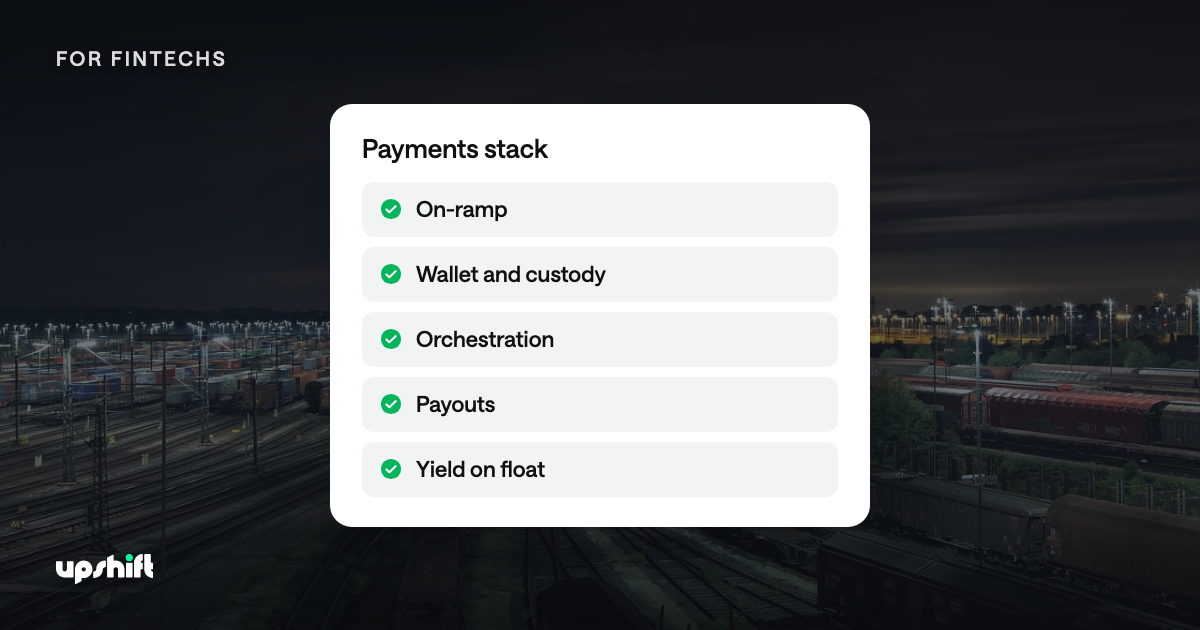
What is stablecoin orchestration? The stack, layer by layer
Stablecoin orchestration explained: each layer of the stablecoin payments stack, who sells it, and where idle balances earn in a vault.
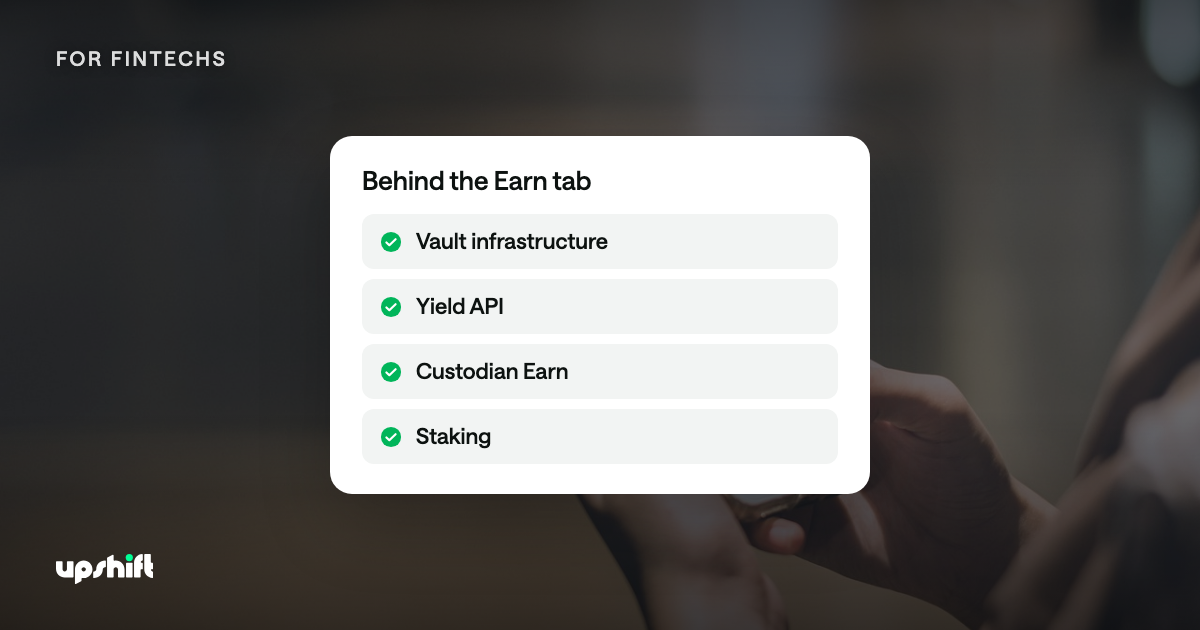
Earn providers for exchanges and wallets, compared
Who powers the Earn tab: vault infrastructure, yield APIs and custodian Earn modules, with the live exchange and wallet deployments.

How to launch a tokenized fund: an asset manager's playbook
How asset managers launch a tokenized fund or vault: wrapper, eligibility, custody and NAV, limits, distribution and reporting.

Stablecoin redemption times: 10 yield options compared
How fast 10 stablecoin yield options pay out, from tokenized funds and Aave to sUSDe, syrupUSDC and vaults, and what happens under stress.
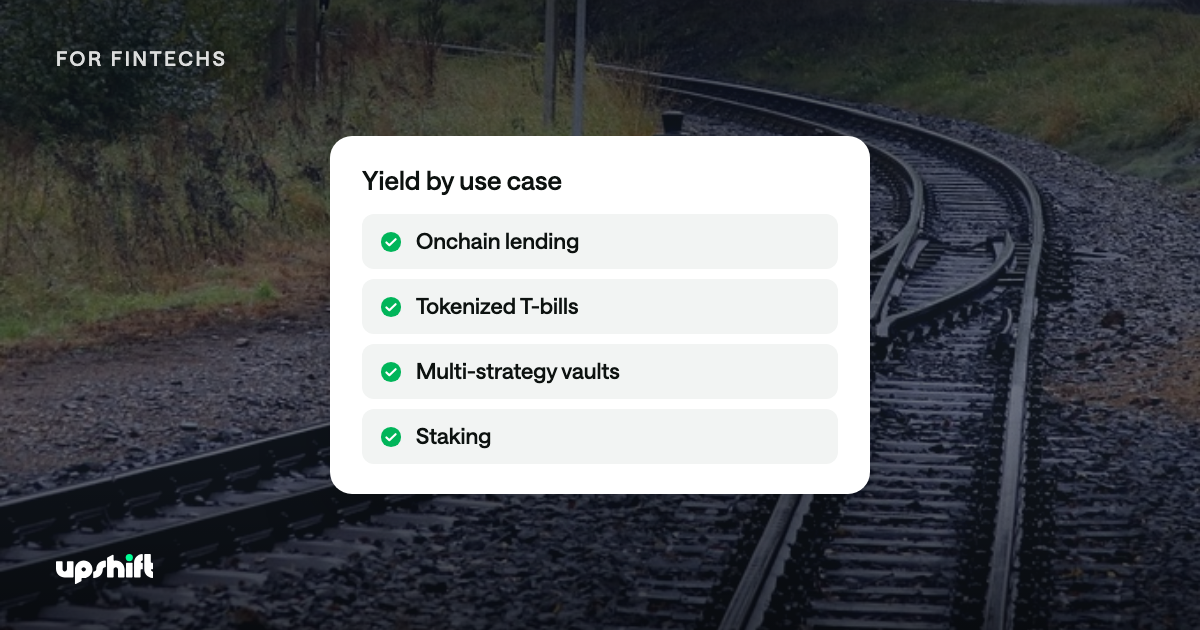
Morpho alternatives: 10 yield options by use case
Morpho runs curated lending vaults. 10 alternatives by use case: lending, tokenized T-bills, multi-strategy vaults, staking and more.
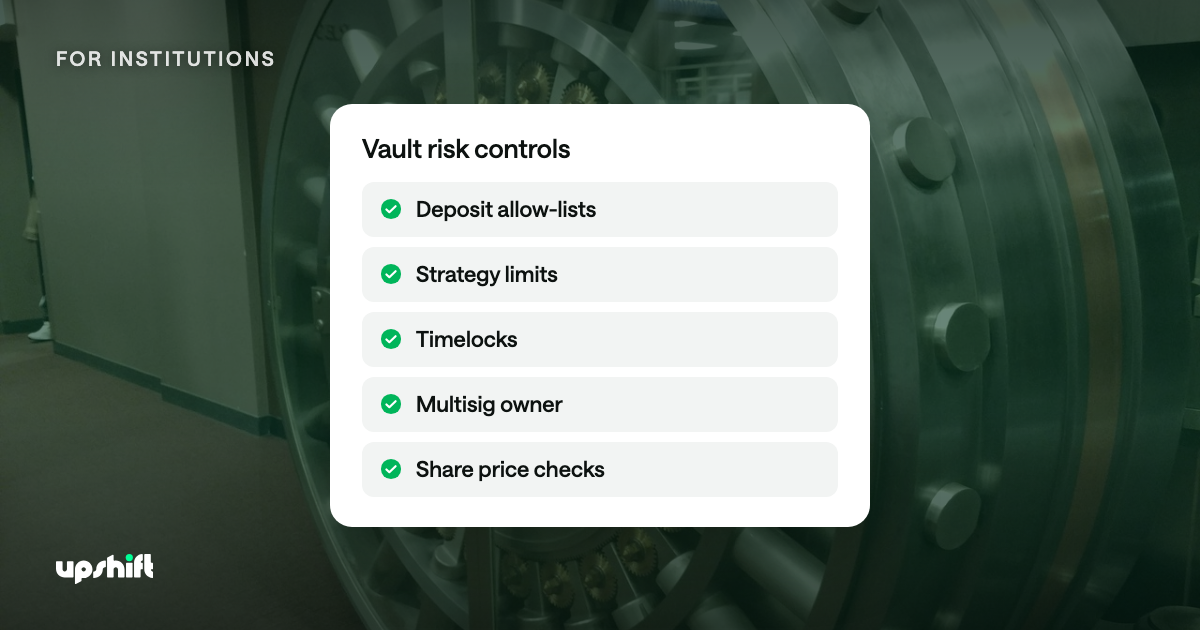
DeFi risk management: stablecoin vault controls compared
Onchain risk controls on stablecoin vaults: allow-lists, caps, timelocks, multisigs, pause and NAV checks, and which providers offer each.
Stablecoin yield SDKs and APIs: 10 providers compared
Stablecoin yield SDKs and APIs compared: what each covers (deposits, redemptions, NAV, chains), what stays with you, and who builds on it.

T-bill rate on stablecoin balances: how fintechs pay it
How fintechs pay a 24/7 T-bill rate on stablecoin balances: tokenized fund, vault with a USDC buffer, Earn tab, fees and the GENIUS Act.

BUIDL vs USYC vs BENJI: tokenized money market funds
BUIDL vs USYC vs BENJI, plus OUSG and USTB: eligibility, minimums, chains, yield, fees and weekend redemptions for fintechs.

Business cash management: 8 options compared
Business cash management compared: checking, sweeps, money market funds, T-bills, Brex/Mercury/Rho, tokenized funds and stablecoin vaults.
Cross-border prefunding: what it costs and how to cut it
What prefunding costs a cross-border payment company, with a formula and calculator, and how stablecoin rails, vaults and credit cut it.

FBO accounts and customer funds: who earns the interest
Who earns interest on customer funds in FBO accounts, cash sweeps and EU safeguarding, and how stablecoin rules change it.

How to start a neobank: the vendor stack, layer by layer
The seven layers of a neobank, from partner bank to cards, wallets and yield, with costs, timelines and stablecoin options.
Vault infrastructure providers: 11 compared for 2026
11 stablecoin vault infrastructure providers compared on contract standard, chains, CeFi reach, curators, SDKs, audits and upgrades.
Stablecoin yield aggregators: 13 platforms compared
13 stablecoin yield aggregators compared: B2B APIs vs retail apps, who picks the protocols, and which reach CeFi venues.
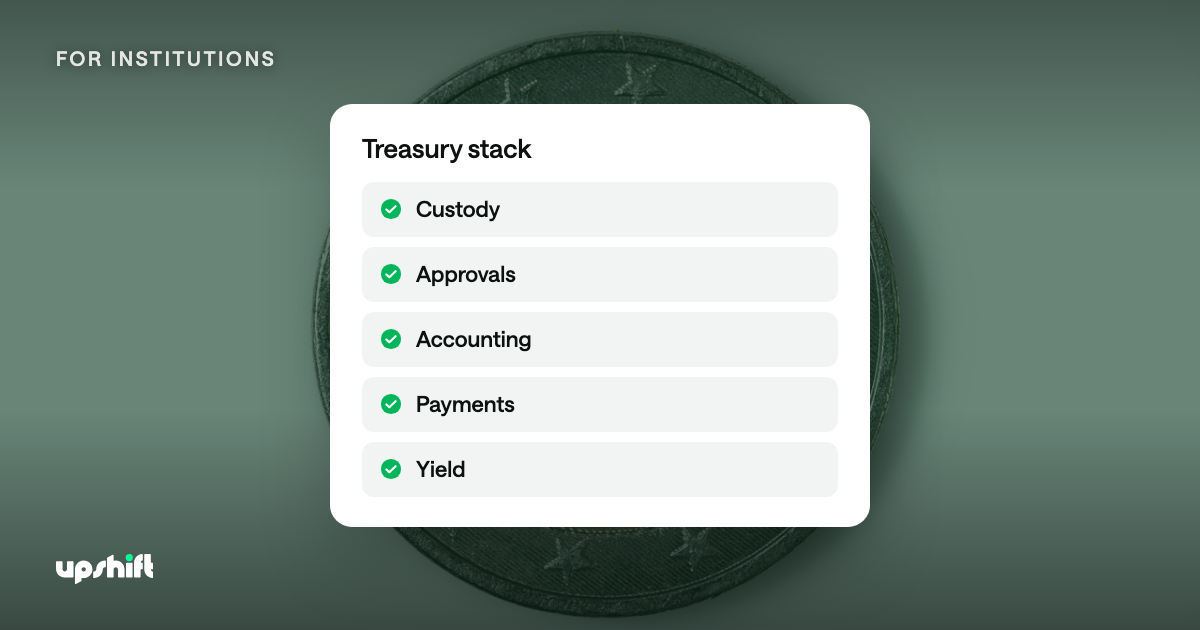
Crypto treasury management: 15 solutions compared
15 crypto treasury management solutions by layer: custody, approvals, accounting, payments and yield on idle stablecoins.

Best stablecoin interest rates today, updated daily
Today's stablecoin interest rates from T-bill funds, Aave, Morpho, curated vaults and CeFi earn, dated and sorted by risk band.
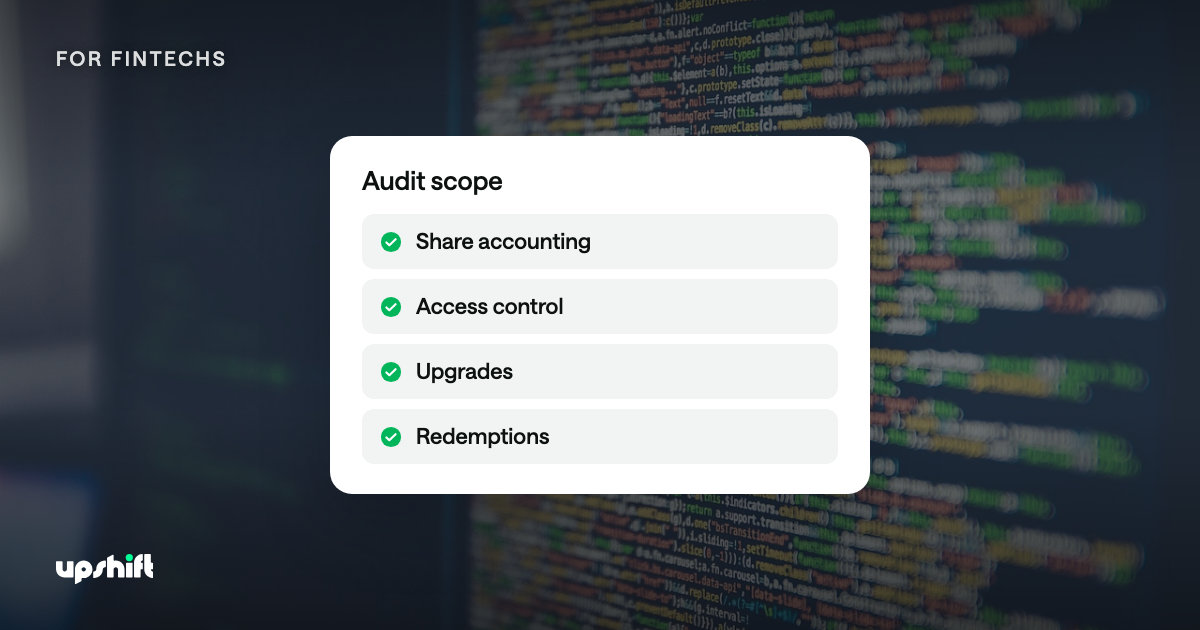
Smart contract audit firms for vaults: 11 compared
11 smart contract audit firms that review vault contracts, what a stablecoin vault audit checks, what it leaves out and how to read one.

Stablecoin infrastructure companies: 13 compared for 2026
13 stablecoin infrastructure companies by layer: who issues, moves, holds and earns on stablecoins, with charters and 2026 deals.
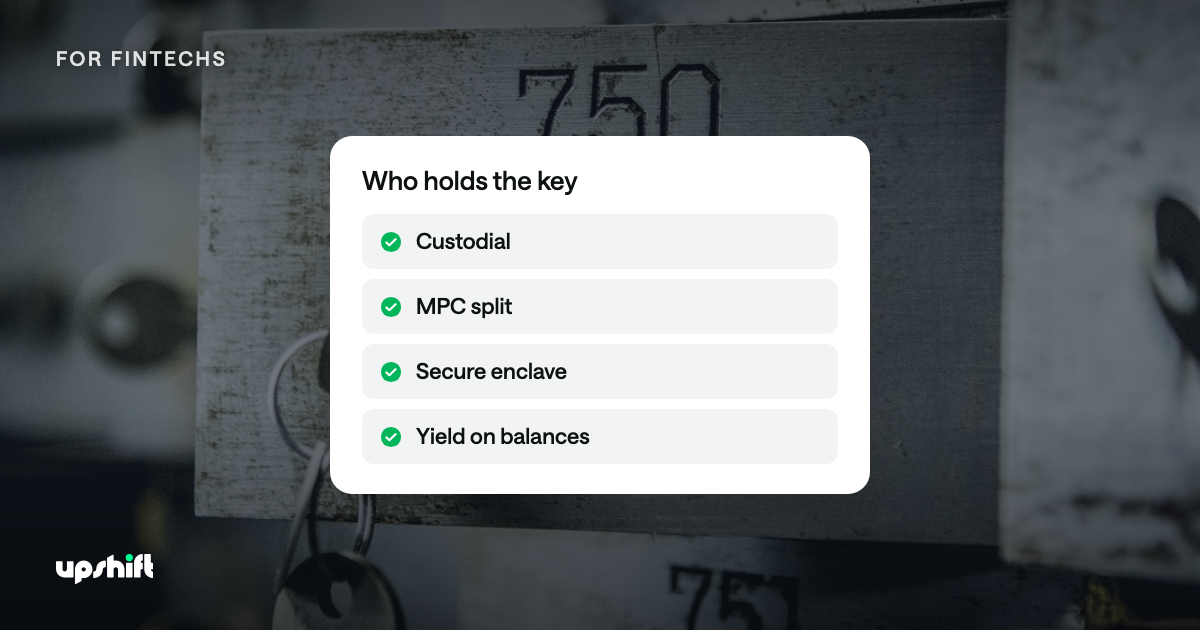
Wallet as a service providers: 12 embedded wallets compared
12 wallet as a service providers compared: owners, who holds the keys, pricing and which let wallet balances earn yield.
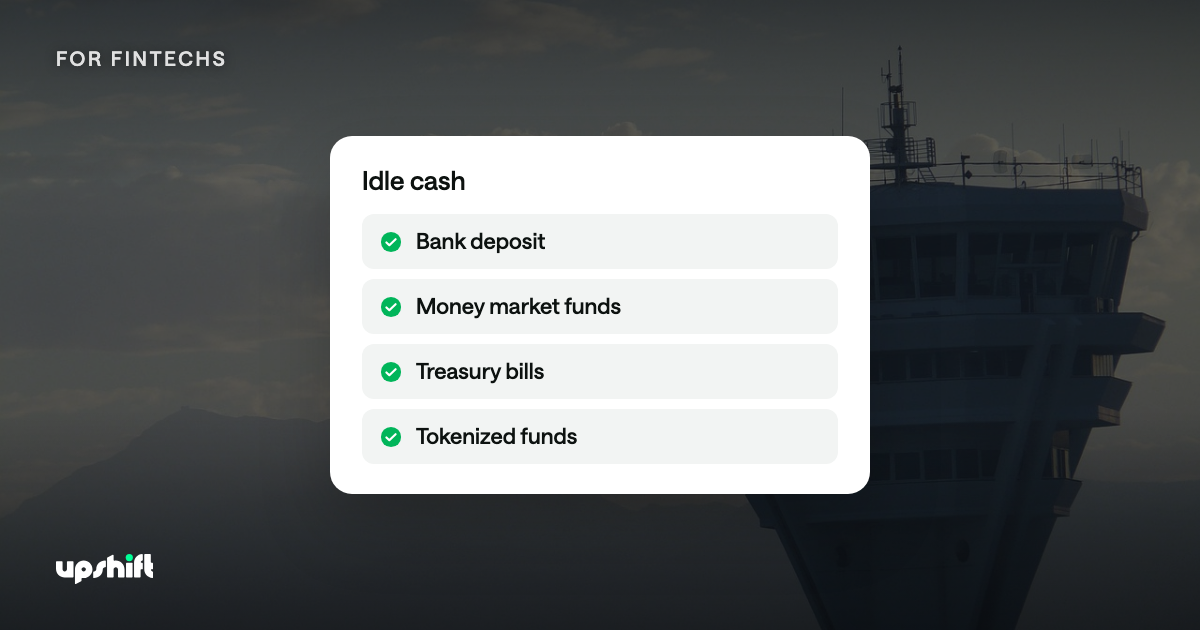
Best treasury management software: 13 systems compared
13 treasury management systems compared on forecasting, where idle cash can go, stablecoin support and published prices.
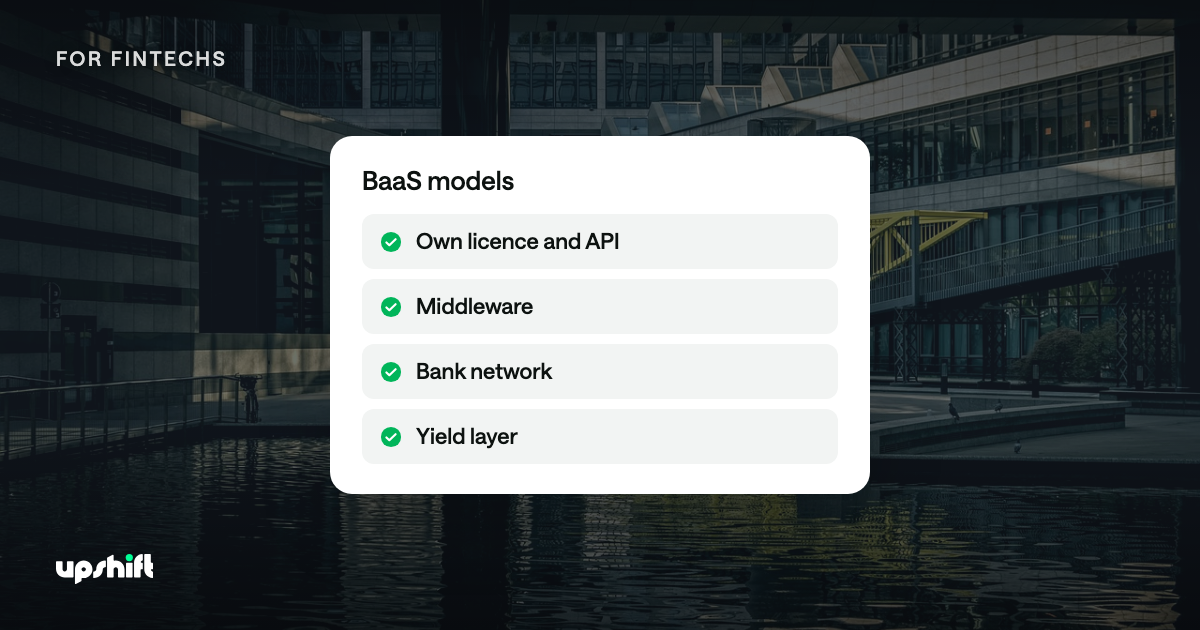
Banking as a service providers: 12 BaaS options compared
12 BaaS providers compared: who holds the licence, who keeps the ledger, stablecoin support and who earns interest on balances.
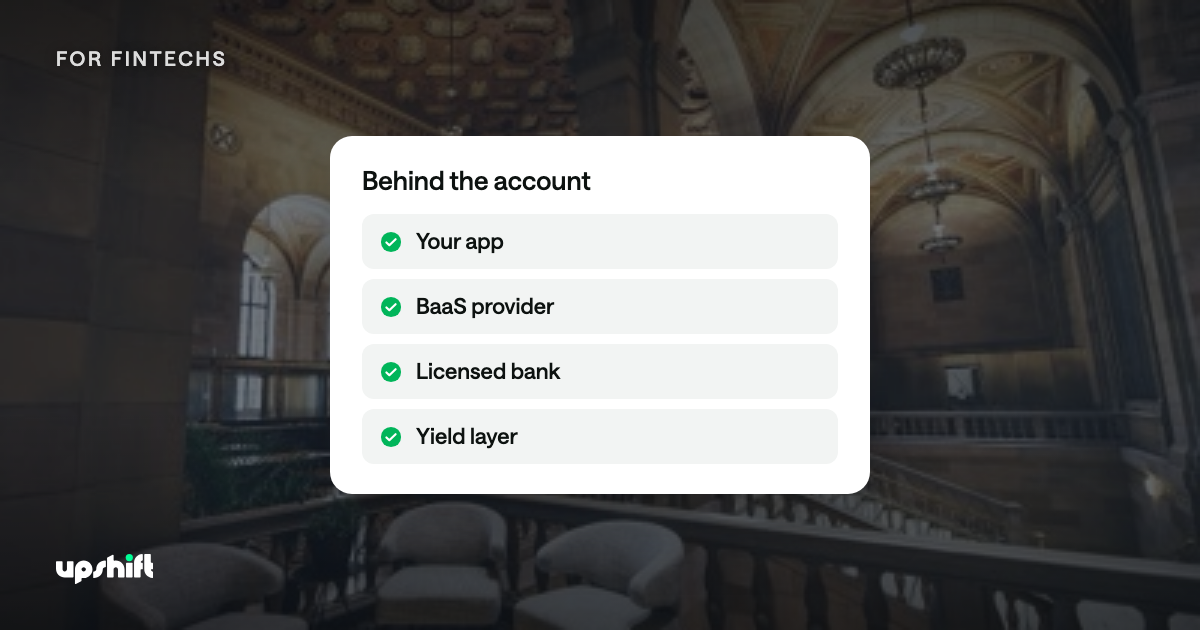
Embedded banking vs BaaS vs embedded finance
How banking-as-a-service, embedded banking and embedded finance differ, who holds the licence, and what Synapse changed.

Embedded finance companies: the 2026 map
The embedded finance companies behind payments, cards, accounts, lending, investing, stablecoins and yield, with 2026 figures.
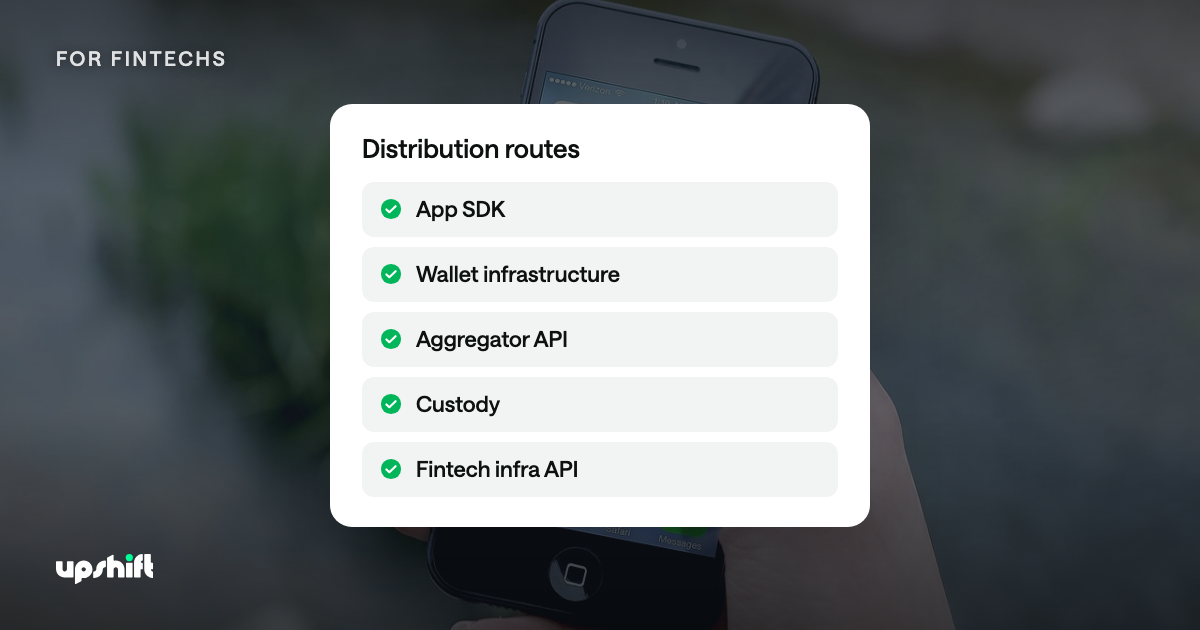
Embedded yield in 2026: how apps distribute vaults
Which apps added onchain vaults in 2026, the five distribution routes, who supplies the capital and how concentrated curation is.
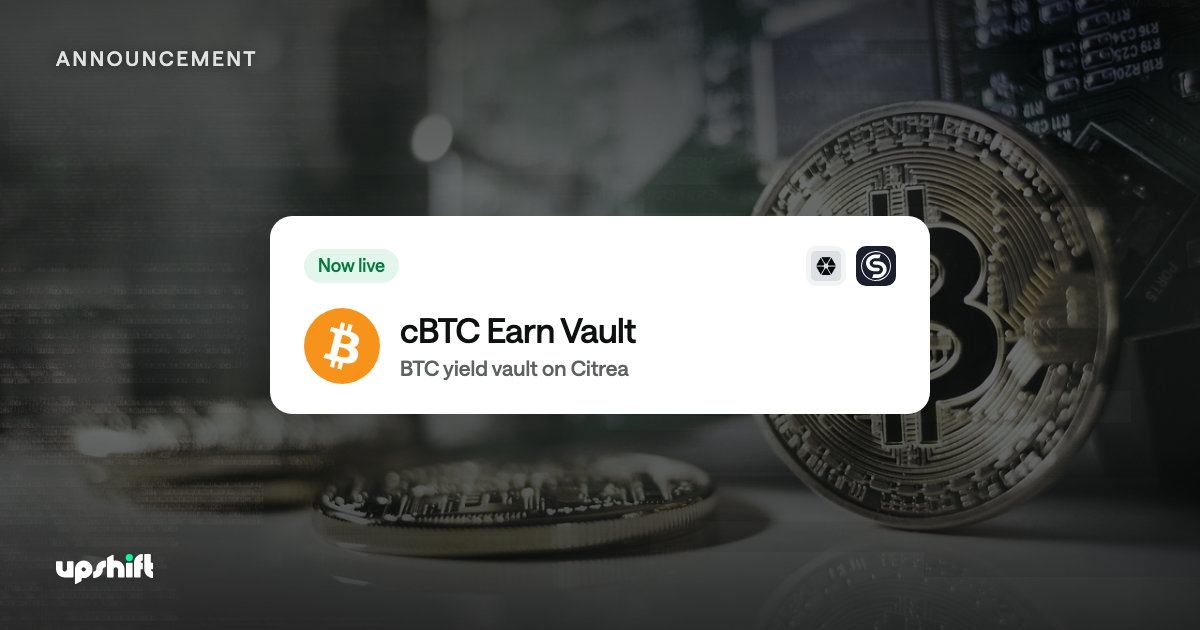
cBTC Earn Vault on Citrea: earn yield on your BTC
Citrea's cBTC Earn Vault keeps your position in BTC. Clearstar curates, Noon runs the base strategy, Upshift runs the vault and app.

How exchanges build an Earn product, and who pays the yield
Build in-house, integrate one protocol or deploy white-label vaults: how exchanges launch Earn, who supplies the yield and how fees split.
Stablecoin sandwich: how fiat-stablecoin-fiat works
How the stablecoin sandwich works layer by layer, what each layer costs, open vs full sandwiches, and where pre-funded money waits.
Stablecoin cross-border payments: how they work
How stablecoin cross-border payments and remittances work, what they cost next to SWIFT, and how pre-funded float can earn.
Stablecoin payroll: earning yield on payroll float
How stablecoin payroll providers earn yield on client float between funding and payout, and how to match each balance to the pay calendar.
Tokenized money market funds vs stablecoin vaults
Tokenized money market funds vs stablecoin vaults: eligibility, minimums, yield, exit speed and risk, and how a vault can hold a fund.
Stablecoin yield for businesses: sources, risks and routes
Stablecoin yield for businesses: where it comes from, how T-bills, lending, vaults and CeFi compare on risk and liquidity, and how to offer it to customers.
Stablecoin treasury management: policy, custody and yield
Stablecoin treasury management for finance teams: liquidity tiers, custody, accounting, approvals, where yield comes from and the DDQ questions to ask.
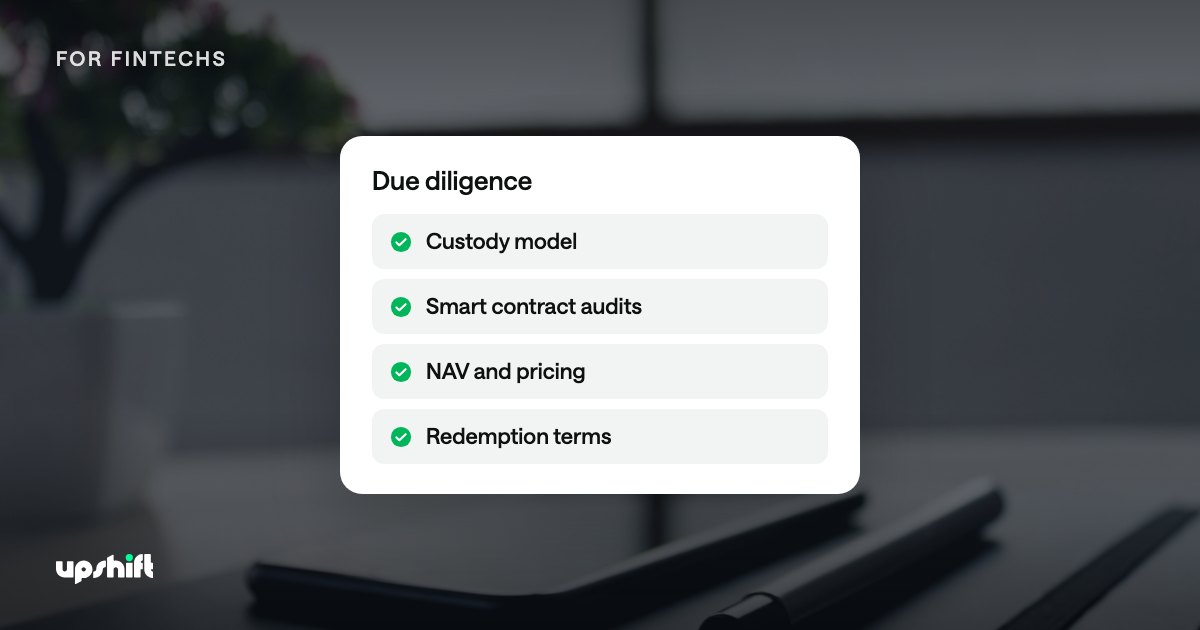
Vault provider due diligence: questions fintechs ask
The DD questions fintechs ask a stablecoin vault provider on custody, upgrades, audits, NAV and redemptions, with Upshift's answers.
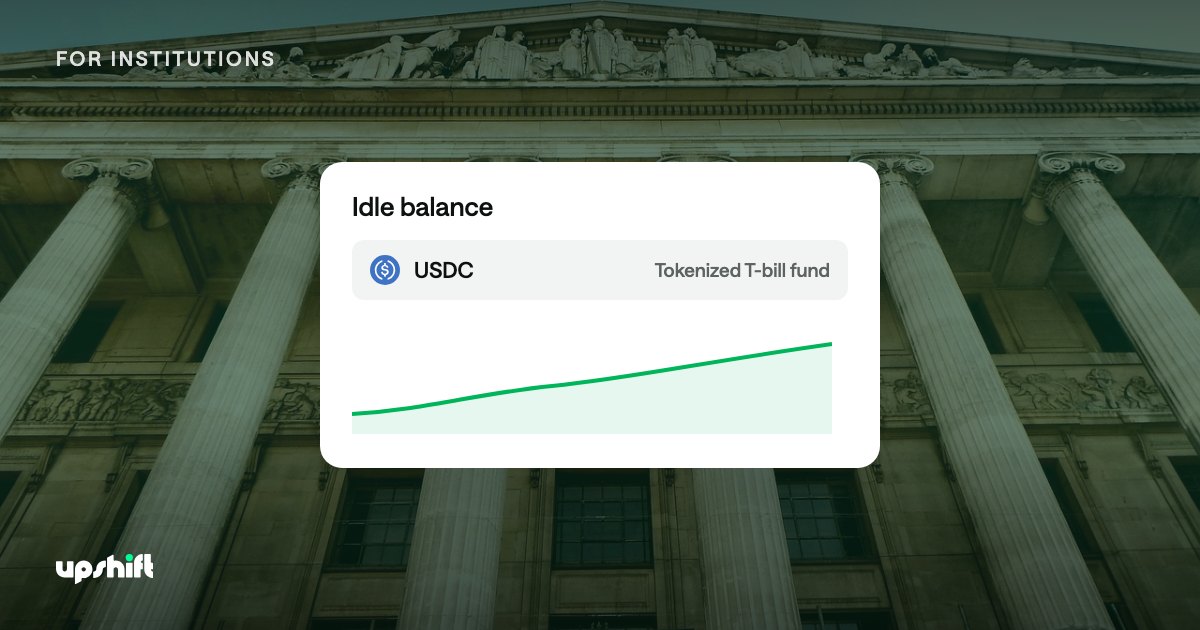
Tokenized money market funds: stablecoin yield without DeFi
How fintechs pay a T-bill-like rate on stablecoin balances via tokenized money market funds in a vault, with no DeFi lending.
How neobanks set tiered stablecoin yield rates
Two ways to tier a stablecoin Earn offer: by risk band or by balance and plan. How each tier is funded and what to disclose.

Best DeFi apps in 2026: 10 options compared
The best DeFi apps for swaps, lending, stablecoin savings, fixed yield, staking, perps and bridging, with TVL, fees and main risks.
Best crypto payment gateways in 2026: 10 compared
Fees, settlement, chains and licences for 10 crypto and stablecoin payment gateways, from Stripe and BitPay to CoinGate and BVNK.

Best crypto staking platforms in 2026: 10 compared
Coinbase, Kraken, Lido, Jito, Figment, EigenLayer and more compared on custody, fees, exit times and live rates.

Best XRP wallets in 2026: 11 options compared
Xaman, Ledger, Trezor, Tangem, DCENT and 6 more XRP wallets compared on custody, XRPL tokens, Flare reach, reserves and cost.

DeFi insurance: what it covers, costs and who underwrites it
How DeFi insurance works: discretionary vs parametric cover, Nexus Mutual pricing and claims, exclusions, and vaults that earn premiums.

What is liquid staking? LSTs, stETH and jitoSOL explained
How liquid staking works: rebasing vs value-accruing LSTs, share of staked ETH, withdrawal queues, the 2022 stETH depeg, collateral use.

What is USDS? Sky's stablecoin and sUSDS explained
USDS is Sky's stablecoin, formerly DAI. How it converts, what backs it, how sUSDS pays the Sky Savings Rate, and the risks.

What is restaking? EigenLayer, AVSs and LRT yield
How restaking works on EigenLayer, what AVSs and slashing are, how liquid restaking tokens earn, and the risks.

What is Pendle Finance? PT, YT and fixed yield explained
How Pendle Finance splits yield into PT and YT, a live fixed-rate example, the AMM, sPENDLE, Boros, risks and vault share markets.

Stablecoin regulation: GENIUS, MiCA and the rules by country
How the US, EU, UK, Singapore, Hong Kong, UAE and Japan regulate stablecoins: licences, reserves, yield rules and status in 2026.

What is Morpho? Morpho crypto lending explained
Morpho crypto explained: Morpho Blue markets, curated vaults, LLTV and oracles, the MORPHO token, TVL, and the risks lenders carry.

RWA tokenization: how it works, who issues, how to exit
How RWA tokenization works (wrapper, custodian, transfer agent, oracle), market size by asset class, top issuers and the exit gap.

What is Hyperliquid? HyperCore, HyperEVM, HLP and HYPE
What Hyperliquid is, how HyperCore and HyperEVM differ, how HLP and user vaults work, HYPE, fees and past incidents.

What is GHO? Aave's stablecoin explained
What is GHO? How Aave's stablecoin is minted against collateral, how sGHO savings work, its peg history, supply and risks.
Whitelisted and sole-depositor vaults: providers compared
11 vault providers compared on whether deposits, redemptions and share transfers are whitelist-gated, plus sole-depositor vaults and the custodian step.
Upshift vs Mellow vs Lagoon: vault platforms compared
Upshift, Mellow and Lagoon compared on TVL, where assets sit, curator controls, whitelists, exits and CeFi reach, with every row sourced and dated Sep 2026.

APY to APR calculator: convert both ways
Free APY to APR calculator: convert either way for any compounding, down to every Ethereum block, and see why 7-day and 30-day APY differ.

PayFi explained: what payment finance is and how it works
PayFi, or payment finance, earns a return on money moving through payments: financing receivables early and yield on card, settlement and payroll float.

MiCA licence: who needs one, costs and earn products
Who needs a MiCA CASP licence, the capital and timeline by article, what changed after 1 July 2026, and how staking and lending are treated.

What is TVL in crypto? Why DefiLlama and apps disagree
What total value locked measures, how it's calculated, why aggregators and protocol frontends show different TVL, and what a good TVL is.
MPC vs multisig: differences, risks and a hybrid setup
How MPC wallets and multisigs like Safe differ, how each has failed, and how one vault uses a Safe owner with MPC operator keys.

DeFi lending: how lenders earn and get their money out
How DeFi lending works, live stablecoin rates, pools vs curated vaults, withdrawals at 100% utilisation, and past losses.

Funding rate arbitrage: how the crypto basis trade works
How funding rate arbitrage and the crypto basis trade work, 12 months of funding data, the risks, and how delta-neutral vaults package it.
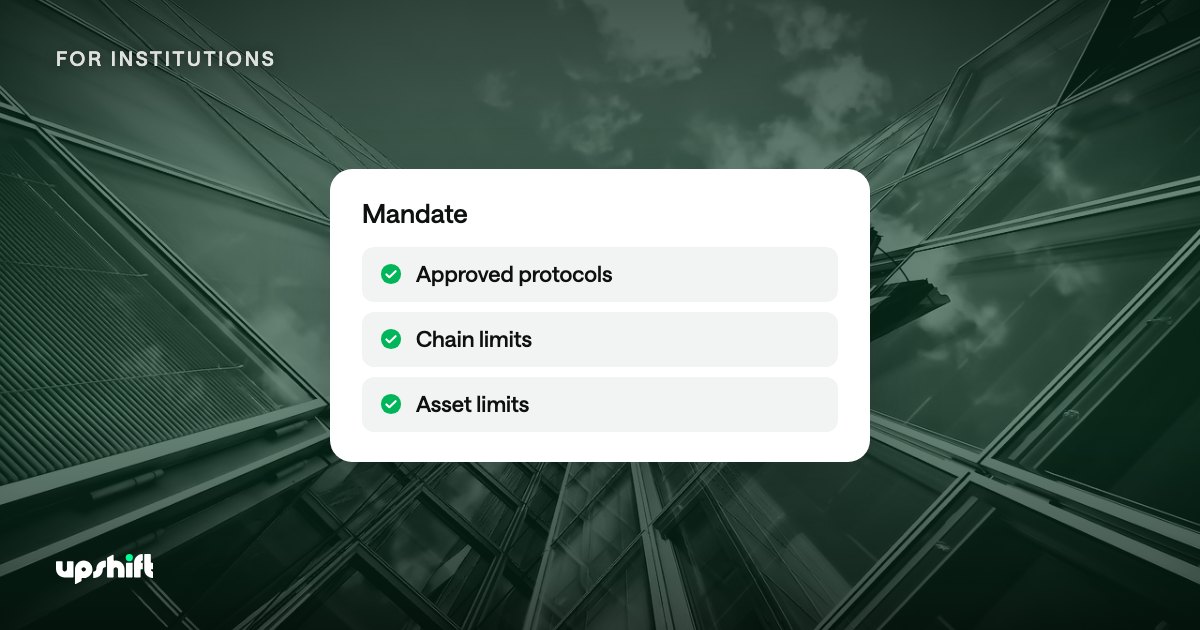
Institutional DeFi: platforms, live examples and controls
Institutional DeFi explained: what an institutional DeFi platform provides, three access routes, the controls risk teams need, and live examples with sizes.
Tokenized deposits vs stablecoins: which pays interest?
Tokenized deposits can pay interest, stablecoin issuers can't, tokenized funds pass on T-bill yield. The law and live bank programs.
Bitcoin treasury companies: top holders and yield
The largest bitcoin treasury companies, what mNAV means, and how treasuries earn yield on BTC and ETH, with the controls each route needs.

Wrapped bitcoin compared: WBTC vs cbBTC vs tBTC vs LBTC
WBTC, cbBTC, tBTC, LBTC, kBTC, FBTC and cirBTC compared: custody, live supply, fees, redemption, safety, and where each earns yield.

T-bill calculator: price, yield and interest
Free T-bill calculator using live Treasury auction rates: price, interest and investment rate, compared with onchain yield after tax.
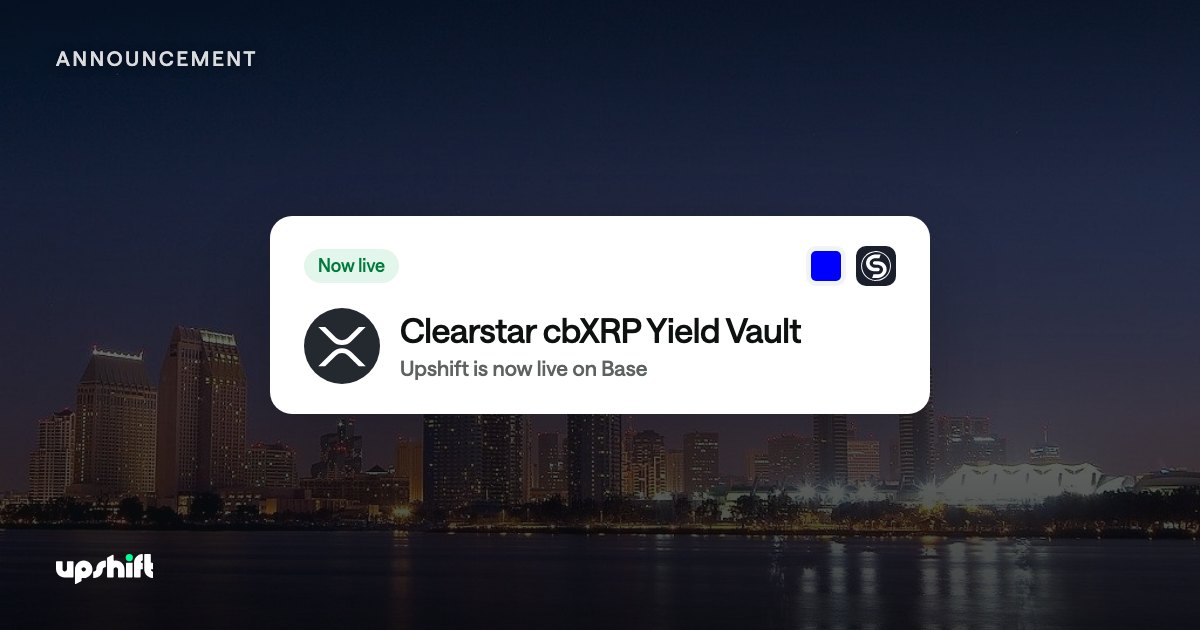
Upshift Is Now Live on Base, Starting With the Clearstar cbXRP Yield Vault
Upshift's vault infrastructure is live on Base, starting with the Clearstar cbXRP Yield Vault. How it works, its risks, and where to find it.

How do stablecoins make money? Issuers and holders explained
How stablecoin issuers like Tether and Circle make money from reserves, the rate maths, and how holders earn when the coin pays nothing.

What is the safest stablecoin? Ten coins compared
Ten major stablecoins scored on reserves, licences, freezes, peg history and redemption, checked 23 September 2026.

CBDC vs stablecoin: key differences and 2026 status
How CBDCs and stablecoins differ, why the US banned a CBDC, why banks oppose stablecoin yield, and where the digital euro stands.
Ethereum staking yield: ETH rates by provider, Sep 2026
Staked ETH earned about 2.5% in September 2026. Lido, Rocket Pool, cbETH and Coinbase compared after fees, plus the yield stack and how stakers can lose ETH.

What is APY in crypto? How it's calculated, with 2026 rates
APY in crypto explained: the formula, APY vs APR, worked examples, current benchmark rates and why sites show different APYs.

Is XRP a stablecoin? XRP vs RLUSD, and how XRP earns yield
XRP vs RLUSD side by side: price, backing, supply and chains. Plus 4 ways XRP holders earn yield without selling, with the rate and risk of each route.

Stablecoin depeg: what happens to lending markets and vaults
Every major stablecoin depeg, what lending markets did in each, and how oracle design decides who carries the loss.

Tokenized treasuries: the 6 largest funds and USDC exits
$14.93B sits in 108 tokenized treasury funds. The 6 largest compared by size, who can buy, minimum and chains, plus how fast each one pays back in USDC.
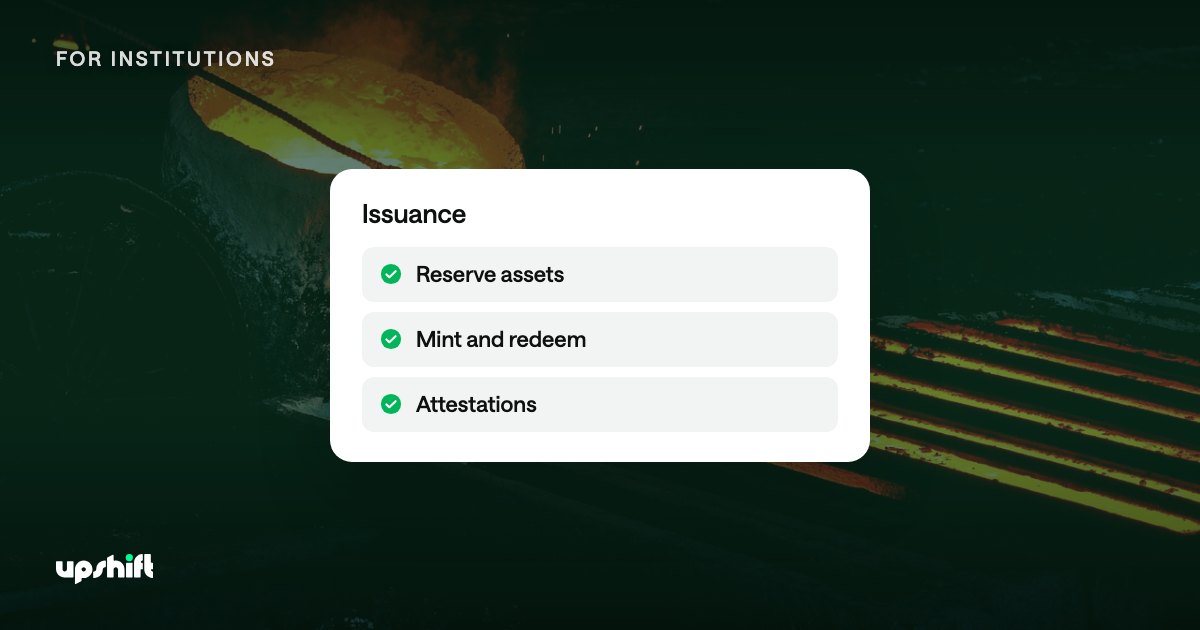
How to create a stablecoin in 2026: 6 issuers compared
The 5 decisions behind a stablecoin, who can issue under the GENIUS Act, 6 white-label issuers compared from Paxos to Agora, and how new coins win holders.

Euro stablecoins compared: 9 MiCA euro coins in 2026
9 MiCA euro stablecoins compared by issuer, licence, supply and chains, from EURC to Revolut's EURR, plus where euro coins earn yield and the digital euro.

What is Pump.fun? How the memecoin launchpad works
Pump.fun explained: how the Solana memecoin launchpad works, bonding curves and graduation, fees, revenue and risks.

What is the fomo app? How it works, fees and revenue
fomo is a social crypto trading app for memecoins, funded with Apple Pay. How it works, its trading fees, revenue growth, who holds your funds and the risks.

What is PYUSD? PayPal's stablecoin explained
PYUSD is PayPal's dollar stablecoin, issued by Paxos. How it works, where it lives, PayPal rewards and onchain yield.

What is USD1? World Liberty Financial's stablecoin
USD1 is World Liberty Financial's dollar stablecoin, held by BitGo. How it works, where it lives, regulation and yield.

What is USDG? Robinhood and Paxos' Global Dollar explained
USDG is Paxos' Global Dollar stablecoin, distributed by Robinhood, Kraken and OKX. How it works, who shares the reserve income, and how to earn yield on it.

What is RLUSD? Ripple's stablecoin explained
RLUSD is Ripple's dollar stablecoin on the XRP Ledger and Ethereum. How it works, how it differs from XRP, and yield.

What is Ethena USDe? How the synthetic dollar works
Ethena USDe explained: how the synthetic dollar holds $1, what backs it, where sUSDe yield comes from, and the risks.

USDC vs USDT (2026): reserves, regulation and yield compared
USDT has $183B in circulation and USDC $75B. One table compares issuer, reserves, audits, US and EU rules and peg history, plus which of the two earns more.

Can you stake XRP? What XRP staking actually is
XRP has no native staking. What products sold as XRP staking really do, who pays the return, and the risks of each.

How to earn yield on bitcoin and where it comes from
Bitcoin has no staking and BTC lending pays near 0%. Where bitcoin yield really comes from, and the risk of each route.

USDT yield: rates by venue and where the yield comes from
USDT rates ran from 2% to over 5% on 23 Sep 2026. Aave, Compound, Spark, Morpho, Fluid and JustLend compared by rate, source and who holds your USDT.

What is ERC-4626? The tokenized vault standard explained
ERC-4626 is Ethereum's standard for yield vaults. How it works, how shares are priced, who uses it and what it leaves out.

USDC yield: where to earn it, rates and risks compared
USDC yield compared: exchange rewards, lending, tokenised T-bills and vaults, with dated rates, liquidity and risk for each, plus yield on business float.

How USDC on Stellar works and where it earns yield
USDC on Stellar is native Circle USDC with sub-cent fees. How to get it, how trustlines and CCTP work, and where it earns.

How Solana vaults work and where their yield comes from
Solana vaults pool one SPL token, issue a share token and deploy it across staking, lending and liquidity on Solana.

What is FXRP? Flare's wrapped XRP explained
FXRP is XRP as an ERC-20 token on Flare, backed by agent collateral and redeemable for XRP at any time.
Get the monthly Upshift update
Explainers on how onchain yield works, plus the product updates we shipped that month. One email a month.
Create a vault with Upshift
Share your use case and we’ll get back to you shortly